
Economic Botany Collection
Using Kew’s collections to understand and support sustainable use of plants, past, present and future.
Meet the team that work on the collection
What can over 100,000 objects tell us about lives around the world?
Plants have been the basis of our food and drink, medicines and poisons, clothing and building materials for millennia.
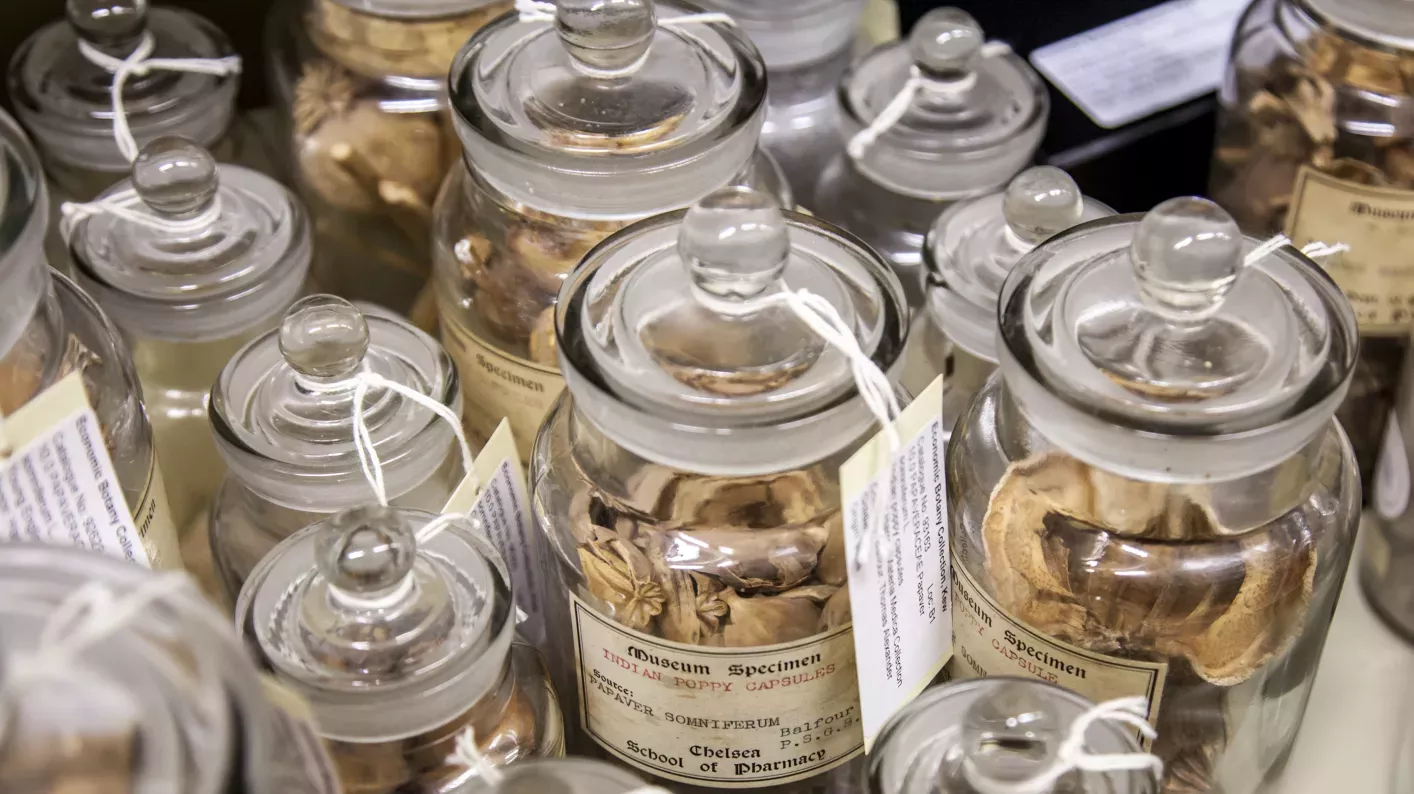
The Economic Botany Collection is an extraordinary range of artefacts, all derived from plants – and 500 items that are from fungi.
Toys, paper, instruments, and fuel are just some of the items in the collection that tell stories about how daily lives are lived, how human moments are celebrated and how communities are built and defended.
Today, we add around 2,000 specimens every year collected through global partnerships.
This collection represents all plant uses and most parts of the world – but it has a particular emphasis on regions affected by British colonialism or trade in the period 1847 to 1930.
Key collections include:
Ancient Egyptian artefacts
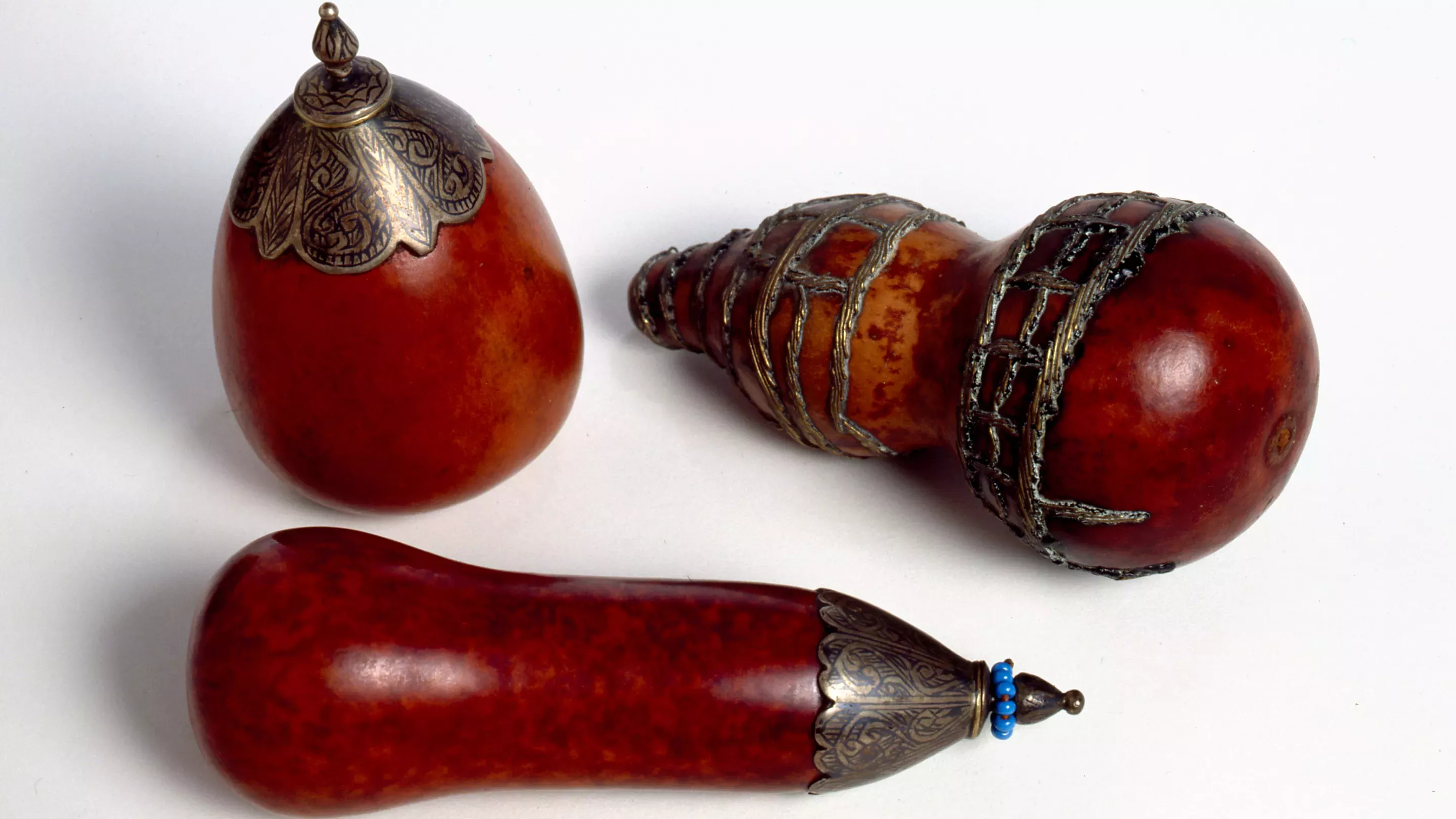
Bark cloth, basketry, gourds
Botanical jewellery
Cinchona
East India Company
Japanese and south Asian lacquerware
Paper
Chinese traditional medicine
20,000 historic materia media
Amazonian collections of Richard Spruce
40,000 specimens of wood
See the full collection in our bespoke Economic Botany Collection Database.
The collection is often used for research in botany, and the histories of medicine, plants, science and exploration.
It’s a vital resource to study the role of empire and trade in British and global history, as well as arts and crafts, archaeology and anthropology.
Examples of research collaboration:
The Amazonian collection of Richard Spruce: Re-examined in collaboration with scientists and Indigenous peoples from Brazil.
Pacific bark cloth: Technical and historical studies of bark cloth (tapa) alongside museums and Pacific islanders seeking to re-establish traditional crafts. (University of Glasgow & Smithsonian Institute).
The Mobile Museum project: Examining Kew’s role in circulating economic botany and objects during the British empire (19th century). (Royal Holloway & University of London).
History of medicinal plants: A collaboration between researchers in Britain, Denmark, Peru and Bolivia to untangling the history and genetics of Cinchona, the source of quinine, one of the few effective treatments for malaria.
The Economic Botany Collections is housed in a purposed-build, temperature-controlled store with compactor units.
It is maintained at 16°C and 50 percent humidity.
Loose substances are kept in sealed glass jars. Others are in acid-free glass boxes.
Wood specimens are kept on open shelves.
Larger objects are in polythene backs or boxes.
Rubber artefacts are kept in anoxic microenvironments.
The collection is organised by plant family (Bentham & Hooker), then alphabetically by genus and species. Objects are divided by type and size.
Economic botany – or useful plants – played a key role in the expansion of the British Empire.
With the colonial project in full flow, there was a desire to find and exploit plants throughout the world and provide a solid income both within colonies and for British industry and government.
Kew was part of this mission. It relied on a network of gardens to map the world’s vital natural resources and move them between countries.
Kew’s Museum of Economic Botany – the forerunner of today’s Economic Botany Collection – was both a ‘library’ of useful plants for manufacturers and a popular attraction for visitors to the Gardens.
Whilst the collections from this period contributed to a wider western understanding of the importance of plants and their uses; there was often a price to pay around their acquisition.
The development of plantation agriculture led to the replacement of forests by monocultures, while people were moved wholesale as indentured labour.
The extraction of wealth during the colonial era led to many of the structural inequalities present today in our society, both in Britain and overseas.
There is no single step in taking responsibility for Kew’s past. We have identified some starting points.
One is transparency over Kew’s history, on a basis of detailed research into Kew’s archives and collections. We are particularly interested in excluded histories, of those peoples often overlooked in previous histories. Another is a dialogue with source communities, increasing access to collections in meaningful ways, and co-creating projects that return knowledge and resources.
Using Kew’s collections to understand and support sustainable use of plants, past, present and future.
Meet the team that work on the collection
Exploring the mobility of biocultural collections to create a unique research resource.
Read about the project
For the first time in Kew’s history, there is a formal strategy to set out a framework for managing, developing and providing greater access to the Science Collections over the next decade.
Read our Collections Strategy