10 February 2022
Senior Research Leader
Plant evolutionary biology, biodiversity, conservation, and pollination, particularly in the Cape of South Africa
I am a plant evolutionary biologist with a wide range of interests. I have worked on the molecular systematics of numerous plant families such as Leguminosae, Polygalaceae, Betulaceae, Myrtaceae, Santalaceae and Sapindaceae, but my main current interest is the Iridaceae family, more specifically the species found in the Cape of South Africa and the evolution of pollination syndromes in this group. I am also interested in biogeographical patterns and processes and the factors promoting diversification and speciation. More recently, I have focused mainly on the application of phylogenetics to conservation planning and the integration of evolutionary approaches in conservation. In particular, I have worked on the use of phylogenetic diversity to explore plant biodiversity patterns in the Cape of South Africa and the application of the Evolutionarily Distinct and Globally Endangered (EDGE) approach to plants. Following the publication of the EDGE list for gymnosperms (see below), I am now leading the development of a similar list for the whole of angiosperms with colleagues at Kew and elsewhere.
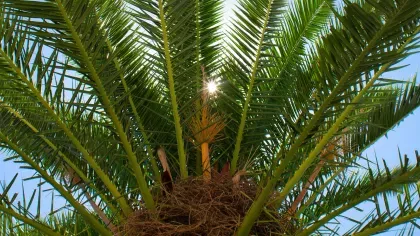
We lead Kew's research to expand and populate the tree of life for plants and fungi.
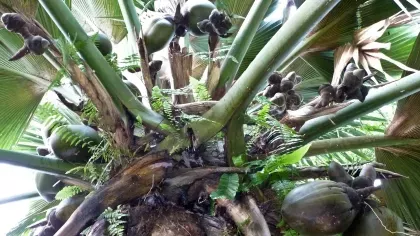
The palm tree-of-life as a key to palm seed conservation. Phylogenomic research in support of the Global Tree Seed Bank project.
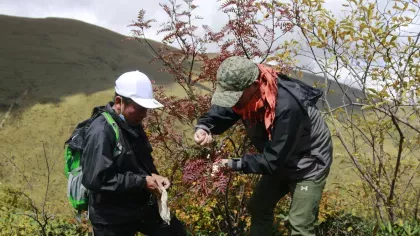
Conserving some of the world’s rarest, endangered and useful tree and shrub species as well as conducting vital tree conservation research in order to retain a significant resource for humanity.
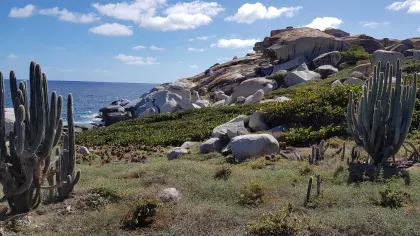
Generating three biodiversity metrics (phylogenetic diversity, species richness and species threat assessments) for flowering plants of the British Virgin Islands to help direct conservation action and management.
Zuntini, A.R., Forest, F., [276 authors], & Baker, W.J. (2024)
Nature (online early).
Forest, F., Moat, J., Baloch, E., Brummitt, N.A., Bachman, S.P., Ickert-Bond, S., Hollingsworth, P.M., Liston, A., Little, D.P., Mathews, S., Rai, H., Rydin, C., Stevenson, D.W., Thomas, P. & Buerki, S. (2018).
Scientific Reports 8: 6053.
Forest, F., Crandall, K. A., Chase, M. W. & Faith, D. P. (2015).
Philosophical Transactions of the Royal Society B. 20140002.
Forest, F., Goldblatt, P., Manning, J. C., Baker, D., Colville, J. F., Devey, D. S., Jose, S., Kaye, M. & Buerki, S. (2014).
Annals of Botany 113: 357-371.
Colville, J. F., Beale, C. M., Forest, F., Altwegg, R., Huntley, B., Cowling, R. M. (2020).
PNAS 117: 20027-20037.
Forest, F., Grenyer, R., Rouget, M., Davies, T. J., Cowling, R. M., Balmford, A., Faith, D. P., Manning, J. C., Procheş, Ş., van der Bank, M., Reeves, G., Hedderson, T. A. J. & Savolainen, V. (2007)
Nature 445: 757-760.